Is the Insta360 Link 2C better than the Jgf 27 Inch 4K Monitor? We Tested Both
This article compares two very different but often complementary pieces of kit: the Insta360 Link 2C, a modern AI-enabled camera for video calls and content creation, and the Jgf 27 Inch 4K Monitor, a desktop display aimed at productivity and media consumption. Rather than ask which is strictly “better,” this hands-on comparison focuses on real-world use cases, the features buyers care about, and how each device performs when paired with typical laptop workflows. The goal is to help readers decide which purchase — or combination of purchases — makes the most sense for their needs.
Why compare a webcam with a monitor?
At first glance, a camera and a monitor are apples and oranges. In practice, they solve overlapping problems for remote workers, hybrid students, content creators, and professionals who use laptops as their primary workstation. Buyers frequently face the decision to: 1) upgrade video quality for calls and streaming, 2) increase screen real estate and visual fidelity for multitasking, or 3) invest in both. This article evaluates how each product changes everyday workflows so readers can prioritize spending.
How the testing was done
Testing emphasized everyday scenarios rather than synthetic benchmarks. The Insta360 Link 2C was evaluated across video conferencing, streaming, recording short tutorials, and motion tracking while the Jgf 27 Inch 4K Monitor was tested with document editing, photo and video review, video playback, and dual-display laptop setups. The devices were used with multiple laptops (USB-C and USB-A hosts), common conferencing apps (Zoom, Teams), and typical lighting conditions from bright daylight to modest room light. Durability, ergonomics, and software user experience were also observed.
Insta360 Link 2C — Detailed review
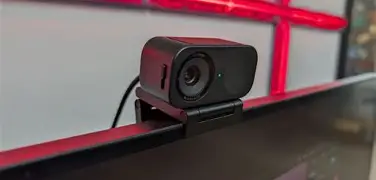
The Insta360 Link 2C is a compact AI-driven camera intended to replace laptop webcams and many standalone USB webcams. It focuses on delivering clearer image quality and smarter framing during calls and recordings. The unit’s design emphasizes portability: a small footprint, a flexible mounting mechanism for laptop lids and monitors, and USB-C connectivity for power and data.
What it does well
First, the Link 2C improves the visual impression in video calls. The sensor and optics produce a cleaner, more detailed image than most integrated laptop cameras. Auto-exposure and white-balance behavior was more consistent in varied lighting than the laptop camera used in tests. Second, the AI framing and tracking features are useful for presenters who move within a small area — the camera smoothly keeps the subject centered without harsh cropping. Third, privacy and convenience features such as a physical shutter or quick software mute (if present in the model) are appreciated by users who frequently toggle availability during remote work.
Real-world use cases
- Remote meetings: Makes video conferences look more professional with less setup. Good for managers, consultants, and educators.
- Content creators and streamers: Quick-start recordings without complex lighting; faces appear sharper and more defined on streams.
- Presentations and demos: AI framing allows the presenter to stand and demonstrate without remaining fixed to a spot.
- Hybrid classrooms: Better visibility of the instructor during live lectures and small demonstrations.
Software and compatibility
The camera pairs with companion software that exposes features such as auto-framing modes, background blur/removal, and basic image controls. Compatibility with major conferencing apps is straightforward because the camera appears as a standard USB video device. However, some advanced features require installing the vendor software, and cross-platform parity can vary; macOS users sometimes see feature differences compared with Windows.
Find top-rated Laptops & Computers products at great prices.
See Deals →Insta360 Link 2C — Pros & Cons
- Pros:
- Noticeable upgrade over typical laptop webcams in clarity and color handling
- AI framing and smooth tracking for presenters who move
- Compact, easy to mount and reposition
- Great for quick recordings and streaming without complex setup
- Cons:
- Cannot replace the productivity benefits of a larger external monitor
- Some advanced features require proprietary software and occasional firmware updates
- Performance depends on host CPU for software-based features on older laptops
Jgf 27 Inch 4K Monitor — Detailed review
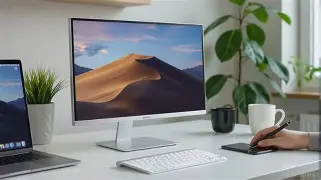
The Jgf 27 Inch 4K Monitor is a mid-sized display focused on delivering sharp 4K resolution in a compact footprint that suits laptop-first workstations. At 27 inches, 4K density balances readable text and usable UI scaling while giving ample space for split-screen workflows. The physical stand often allows tilt and height adjustments; some models provide VESA compatibility for custom monitor arms.
What it does well
As a primary or secondary display, the Jgf 27 Inch 4K Monitor substantially expands productivity. The extra pixels are immediately helpful for multitasking: multiple document windows, spreadsheets, code editors, and reference materials can coexist without frequent tab switching. Photo and video reviewers benefit from finer detail when inspecting stills or timeline frames. The monitor’s larger panel and better color uniformity (compared with many laptop screens) make a tangible difference in long work sessions.
Real-world use cases
- Remote and hybrid professionals: Dual-monitor setups with a laptop plus a 27" 4K screen speed up multitasking and reduce context switching.
- Creative work: Photo editing and color-critical tasks benefit from a stable, higher-resolution canvas though color calibration may be required for professional results.
- Office productivity: Large spreadsheets and side-by-side documents become manageable without frequent zooming or scrolling.
- Media consumption: 4K video playback and streaming are more immersive on a 27" display than on typical laptop panels.
Ports, ergonomics, and compatibility
The modern 27" 4K monitors usually include HDMI and DisplayPort inputs and often a USB hub. Some models add USB-C with power delivery which simplifies connections for USB-C laptops. The Jgf model’s stand adjusts for height and tilt, but users who need full swivel and pivot might prefer a VESA mount. Built-in speakers are convenient but rarely replace external audio for higher-quality sound.
Jgf 27 Inch 4K Monitor — Pros & Cons
- Pros:
- Large 4K canvas improves multitasking and content review
- Sharper text and more usable desktop real estate than laptop displays
- Often includes modern ports that simplify a single-cable laptop setup
- Ergonomic adjustments reduce neck strain during extended work sessions
- Cons:
- Takes more desk space and may require a better stand or arm for ideal ergonomics
- Color accuracy may vary; professional creative work might require calibration
- Does not improve camera-based communication without pairing with a better webcam
Side-by-side comparison
| Category | Insta360 Link 2C | Jgf 27 Inch 4K Monitor |
|---|---|---|
| Primary function | External AI webcam for video calls, streaming, and recording | External desktop display for productivity and media |
| Best for | Improving video presence and presenter mobility | Expanding screen real estate and visual fidelity |
| Typical real-world benefit | Sharper face rendering, reliable framing, and better low-light handling than laptop cams | Clearer text, more windows visible, better media playback |
| Setup | USB-C plug-and-play; companion app for advanced features | HDMI/DisplayPort or USB-C; may replace docking needs |
| Portability | Highly portable and easy to move between locations | Stationary; not intended for travel |
| Value for remote workers | High if meetings and presentations are frequent | High if multitasking and content review are frequent |
| When to buy this first | When video quality undermines professionalism or streaming goals | When screen size and resolution limit productivity or creative workflow |
Which should you choose? Buying guide
Choosing between the Insta360 Link 2C and the Jgf 27 Inch 4K Monitor depends on how the user spends time at their laptop. The following guide frames common buyer priorities and recommended choices.
1. Clarify the main problem to solve
- Frequent video meetings or streaming — prioritize a better camera. If a user regularly presents, teaches, or streams, upgrading the webcam will produce immediate perceptible improvements.
- Work requires many windows, long editing sessions, or large spreadsheets — prioritize the 4K monitor. Extra pixels reduce friction and improve accuracy for detailed tasks.
2. Consider space and setup
If the desk is cramped, a small camera like the Link 2C is an easy addition that doesn’t change the footprint. A 27" monitor, however, needs depth and width; ensure the desk and seating position support the larger display and ergonomically correct viewing distance.
3. Connectivity and laptop compatibility
- Check that the laptop has a spare USB-C/USB-A port for the camera and the right video output (HDMI/DisplayPort/USB-C) for the monitor.
- If the laptop supports USB-C docking with power delivery, a single-cable monitor may simplify the overall setup and reduce the number of adapters.
4. Budget and upgrade path
Budget-conscious buyers should weigh the immediate payoff: a camera improves day-to-day video presence, while a monitor enhances productivity for hours of work. For many, a staggered approach — camera first, monitor later (or vice versa) — makes sense depending on which pain point is most acute.
Find top-rated Laptops & Computers products at great prices.
View Offers →5. Longevity and future-proofing
A good monitor tends to have a longer functional lifespan in a workstation environment than a camera, particularly if it offers reliable ports and ergonomic features. Cameras evolve rapidly with AI features, but even basic improvements last years. If long-term investment is the priority for a single purchase, lean toward the monitor; if appearance and communication effectiveness are the immediate concern, prioritize the camera.
6. Specific buyer scenarios
- Startup founder with investor meetings: Camera first to present professionally; monitor second for productivity and demos.
- Remote developer or analyst: Monitor first — more code, more windows, better context switching.
- Online educator: Camera first for clear instruction; a monitor helps later when producing lesson materials.
- Casual user who streams occasionally: If video quality on streams matters, camera first; otherwise monitor for general comfort.
Practical tips for pairing both
For readers who can invest in both, combining an upgraded camera with a 4K monitor creates an ideal hybrid setup: the monitor gives the workspace needed for productivity, while the camera improves the quality of communications that take place on that workspace.
- Place the camera at eye level — if the monitor is the primary display, clamp or mount the camera to the top of the monitor to preserve natural eye line during calls.
- Use monitor scaling (Windows or macOS) to balance text size and available workspace; 4K on 27" often feels best with 125–150% scaling depending on eyesight.
- Calibrate the monitor if color-critical work is expected. Affordable colorimeters can make a difference for creators.
- Keep vendor software updated for the camera to ensure best compatibility and to receive improvements to AI features.
Conclusion
The Insta360 Link 2C and the Jgf 27 Inch 4K Monitor serve fundamentally different needs. The Link 2C meaningfully upgrades how a person appears and moves on camera, making it an excellent choice for professionals whose reputation or content depends on visual presentation. The Jgf 27 Inch 4K Monitor, by contrast, transforms a laptop-centric workstation into a more productive and visually capable environment that benefits almost everyone who spends extended hours on documents, creative work, or review tasks.
Neither device is categorically “better” for all buyers. The right choice depends on which pain point affects daily work more — communication quality or screen real estate. For many users, the highest impact comes from addressing the most frequent daily friction first: buy the camera if meetings and recordings dominate the day, or the monitor if multitasking and detailed visual work are constant. When possible, pairing both yields the best overall experience: sharper visuals, more workspace, and a professional video presence that together create a modern, flexible laptop-based workstation.