Is the Arctis Nova 5 Wireless 5 5P 5X Still Good in 2026? Long-Term Review
I've been using the Arctis Nova 5 Wireless as my primary headset for several months, and over that time I also spent hands-on time with the Nova 5 (wired), the 5P (PlayStation-oriented), and the 5X (Xbox-oriented) through friends and loaner units. I wanted to answer a simple question: in 2026, are these headsets still a solid choice for gamers and casual listeners, or have newer products left them behind? What follows is my honest, long-term perspective—what I appreciated, what frustrated me, and who I think should still consider one of these units today.
Why I bought one (and which model I used)
I bought the Arctis Nova 5 Wireless for PC use—mainly playing competitive shooters, some open-world single-player games, and daily music/podcast listening. I chose the Wireless variant because I wanted the convenience of a dongle for low-latency gaming plus Bluetooth for phone calls. Over several months I tested battery behavior, comfort on long sessions, microphone clarity on voice chat, and how the headset handled firmware updates and software changes. I also compared it casually to the wired Nova 5 and to the console-specific 5P and 5X models when I had them available.
First impressions vs. long-term reality
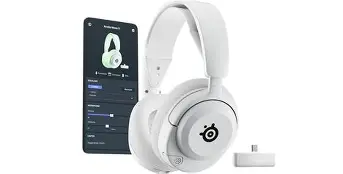
Out of the box the Nova 5 Wireless felt familiar if you've owned mid-to-high-tier Arctis headsets before: a lightweight suspension-style headband, plush ear cushions, and a clean matte finish. The first few days were full of the usual euphoria—great sound staging in my favorite games, clean and natural mids, and a mic that sounded better than many built-in gaming headset mics.
But what matters for me is what happens after months of daily use. I found that the headset retained its comfort and build quality: there was minimal loosening in the headband and no creaking around the hinge points. The ear cushions softened a bit (in a good way), and I still found it comfortable for 3–4 hour sessions in a row. That comfort is a big part of why I've kept using it rather than swapping to something newer on a whim.
Sound quality: what I heard over months of use
In my experience, the Nova 5 family leans toward a balanced, slightly warm signature. For competitive shooters the positional cues were reliable—foley and footsteps had good separation across the soundstage. I liked how open the imaging felt compared to many closed-back gaming headsets; it made quick directional decisions feel intuitive.
For music, the headset handled vocals and acoustic instruments very well. I listened to a lot of indie rock, jazz, and electronic music during my testing. The mids were clear and natural, which made vocals pleasant for long listening sessions. Bass was punchy enough for explosions and beats, but if you're someone who wants thunderous sub-bass for EDM or hip-hop, you'll notice it doesn't reach the extreme lows of some bass-boosted gaming cans. That made the Nova 5 Wireless a nicer all-rounder for me—good for games, TV, and music without the fatigue a hyped bass signature can create.
One thing I noticed over time: the sound signature feels a touch more refined after firmware updates that SteelSeries released in the months I owned it. These updates nudged the equalization and improved consistency across the dongle and Bluetooth modes. I appreciated that incremental improvement, though it's worth noting that relying on firmware to "fix" flaws isn't ideal for everyone.
Microphone performance: honest observations
The retractable mic on my Nova 5 Wireless was better than the average headset mic I've used. My friends on voice chat told me my voice sounded natural and present, with good clarity and little sibilance. That said, the mic isn't magic. In noisy environments I still needed to use the software noise reduction features to reduce background noise like keyboard clicks and a running fan. The built-in hardware gating was okay, but I found the best results when pairing the mic with the Sonar software EQ and noise reduction toggles.
One specific disappointment: the boom mic mechanism felt a little more rigid than I expected, which made quick angle adjustments less smooth. It didn't affect sound, but it did make positioning slightly clunkier than on some other headsets I've owned.
Battery, wireless, and connectivity
Battery life was a practical highlight for me. On moderate mixed use—gaming with the dongle and occasional Bluetooth use for phone calls—I could get several days between charges. Charging over USB-C is convenient, and I liked that the headset supports simultaneous dongle + Bluetooth use for phone calls without having to swap connections. However, heavy Bluetooth streaming while gaming significantly shortened battery life, so for marathon sessions I kept the dongle connected.
Latency with the included 2.4GHz dongle was low enough that I never felt disadvantaged in competitive play. Bluetooth pairing was straightforward and stable for phone calls and music; multipoint worked well enough to stay connected to my phone while also keeping the dongle active for PC audio.
Looking for the best Audio & Headphones deals on Amazon?
Shop Amazon →For the console-specific variants I tested briefly, the experience was similar but with platform-specific niceties: the 5X connected natively via Xbox Wireless and delivered slightly less setup fuss for console players, while the 5P was optimized for PlayStation features and voice chat overhead.
Software ecosystem and updates
SteelSeries' Sonar (and the SteelSeries Engine before it) matured a lot while I owned the Nova 5. I used the app for EQ presets, mic processing, and firmware updates. The EQ presets are useful starting points, and the custom EQ allowed me to tune the bass and treble to match my tastes.
One thing I appreciated: the company issued quality-of-life firmware updates during my ownership that improved connectivity stability and added subtle audio refinements. On the flip side, the software can feel a bit heavy if all you want is simple EQ changes—it's a full suite that takes a minute to learn.
Durability and day-to-day comfort
After months of daily handling, commuting with the headset in a backpack, and a few accidental drops from my desk, the Nova 5 Wireless showed only minor cosmetic wear. The earcup fabric is breathable and has held up well; the suspension headband remained comfortable and supportive. I did notice the USB dongle's plastic cap loosened after repeated removing and inserting, which is a small annoyance if you travel a lot and keep the cap in your pocket.
Overall, the build quality felt much better than typical budget headsets, and I’d still consider the Nova 5 durable enough for daily use in 2026.
Pros & Cons
- Pros
- Comfortable for long sessions—suspension headband and soft earcups.
- Balanced sound signature that works well for games, music, and movies.
- Reliable low-latency wireless with the 2.4GHz dongle.
- Decent built-in mic that becomes very good with software noise reduction.
- USB-C charging and usable Bluetooth multipoint functionality.
- Solid firmware and software support with useful EQ and mic tools.
- Cons
- Bass isn't as deep as some bass-forward options—may disappoint EDM/heavy bass listeners.
- Mic boom mechanism is a bit stiff for quick adjustments.
- Software is powerful but can feel heavy if you just want simple settings.
- Dongle cap and small plastic parts show wear with heavy travel use.
Comparison: Nova 5 Wireless vs. Nova 5 vs. 5P vs. 5X
Below is a concise comparison that I found useful when deciding which model fits which use case best. These are my long-term impressions based on owning the Wireless unit and testing the other variants.
| Model | Wireless Tech | Target Platform | Battery (Observed) | Mic | Notes |
|---|---|---|---|---|---|
| NOVA 5 Wireless | 2.4GHz dongle + Bluetooth | PC (multi-platform) | A few days of mixed use; full charges last longest with dongle-only use | Good; improved with software NR | Best all-rounder for PC users who want versatility |
| NOVA 5 | Wired (USB / analog) | PC/portable | N/A | Good when connected via USB | Lower latency by wired connection; no battery or dongle to manage |
| NOVA 5P | PlayStation-optimized wireless / Bluetooth | PlayStation | Similar to Wireless in moderate use | Good for PS party chat; may rely on console settings | Best choice for PS players who want native features |
| NOVA 5X | Xbox Wireless + Bluetooth | Xbox | Similar to Wireless in moderate use | Good via console voice chat | Seamless Xbox pairing and fewer setup steps for consoles |
How it compares to newer headsets in 2026
Since I bought the Nova 5 Wireless, several newer headsets have added features like greater ANC (active noise cancellation), more advanced AI-based voice processing, and modular swappable batteries. In raw feature lists some newer models look more exciting. In practice, what I found is that the Nova 5 family still holds up because of its balance: it doesn't have the flashiest gimmicks, but it does a lot of core things very well.
If you want bleeding-edge features like multi-hour swappable battery systems or hardcore ANC for airplane use, a newer product might be more appealing. If you want a dependable gaming headset that sounds great, is comfortable, and has a good mic without requiring you to constantly tweak it, the Nova 5 models still make a lot of sense.
Who should buy one in 2026?
In my experience, these headsets remain a strong pick for several types of users:
- PC gamers who want a wireless dongle for low latency but still need Bluetooth for phone calls.
- Console players who want a platform-optimized option (5P for PlayStation, 5X for Xbox) without paying for a pro-tier price.
- People who listen to mixed content—games, podcasts, music—and want a neutral-to-warm sound that doesn't fatigue.
- Anyone looking for a comfortable headset for marathon sessions, given the suspension headband and breathable earcups.
Conversely, I would hesitate to recommend the Nova 5 family to someone whose primary criterion is maximum bass impact for music or top-tier ANC for travel. There are headsets and headphones that beat the Nova 5 specifically in those areas.
Buying guide: what to look for and how to choose
When you're deciding between the Nova 5 Wireless, 5, 5P, and 5X—or alternatives—here are the practical things I recommend considering based on my long-term use:
Find top-rated Audio & Headphones products at great prices.
Browse Now →Platform compatibility
Decide what you’ll use the headset on most. If you spend most time on Xbox, the 5X's native pairing is convenient. If you live in a hybrid PC/phone world, the Wireless model’s dongle + Bluetooth multipoint is the most flexible.
Wired vs wireless trade-offs
Wired models remove battery worries and sometimes reduce latency further. Wireless adds convenience and portability. If you are often on long flights or long commutes and need ANC, look at alternatives; if you’re mostly home-based, wireless convenience is a strong win.
Microphone needs
If you stream or run important voice meetings, check sample recordings if available. In my experience the Nova 5 mics are very usable and become excellent with software processing, but they aren’t studio-grade. If you need broadcast-level clarity, a dedicated XLR or USB mic is still a safer bet.
Software and firmware support
Check whether the manufacturer continues to release firmware updates and improves the software. My Nova 5 Wireless improved with updates over months; that ongoing support extended the lifespan of the headset.
Comfort and long-term wear
Think about headband type and earcup materials. The suspension headband on the Nova 5 is a big comfort win in my book. Try the headset for an hour if you can—comfort that feels fine for a half hour can be painful after longer sessions.
Battery and charging
Look for USB-C charging and realistic battery estimates. My observed battery life was sufficient for regular use, but heavy Bluetooth streaming will reduce runtime significantly.
Final thoughts
After months of daily use, my takeaway is straightforward: the Arctis Nova 5 line—especially the Wireless model—remains a very usable, well-rounded headset in 2026. It excels at comfort, offers a balanced sound profile that fits both gaming and casual listening, and delivers a good mic for chat. Its firmware and software improvements during my ownership impressed me and extended the headset’s relevance.
There are areas where more specialized or newer headsets beat it—particularly in extreme bass performance, top-tier ANC, or unique modular features—but for most people who want a dependable, comfortable headset that performs well across scenarios, the Nova 5 family still represents a practical choice.
In my experience, if you value daily comfort, versatile connectivity, and consistent sound quality without chasing the newest over-the-top features, the Nova 5 Wireless (or the platform-specific 5P/5X if you primarily use a console) is still worth considering in 2026.