Don't Buy the Penrose Wireless Until You Read This Full Analysis
Introduction
The Penrose Wireless arrived with the kind of marketing that promises a lot: high-fidelity sound, long battery life, effective noise cancellation, and a comfortable fit for all-day use. Buyers shopping in the audio category are increasingly savvy — they care about real-world battery endurance, how a product sounds with different genres, call and microphone performance for remote work, latency for gaming and video, and how a device holds up to daily travel. This analysis examines the Penrose Wireless from those practical angles to help readers decide whether it is the right pick for their needs.
What this analysis covers
This article provides a detailed, objective review of the Penrose Wireless, focusing on:
- Design and build quality
- Sound signature and performance across genres
- Active noise cancellation (ANC) and isolation
- Battery life and charging behavior
- Microphone and call performance
- Wireless connectivity, codecs, and latency
- Real-world use cases and buyer considerations
Where appropriate, qualitative comparisons to typical competitors and alternatives are included to help contextualize the Penrose Wireless’ strengths and weaknesses.
Detailed Product Review and Analysis
Design and build
The Penrose Wireless uses a modern aesthetic: matte finishes, minimalist branding, and a folding mechanism intended for portability. The earcups appear to be constructed from mixed materials — a lightweight composite shell with metal-reinforced joints — which helps keep the overall weight down while improving perceived durability. Padding on the earcups and headband strikes a balance between softness and support, though people with larger heads should verify fit before purchase because padding thickness can vary between production runs.
Build quality is adequate for daily commuting and office use. The hinge tolerances and clamping force are important for long-term comfort and for preventing creaks; in this model they’re within an expected range, but consumers who frequently toss headphones into a bag should consider protective storage to avoid wear on moving parts over time.
Sound quality
Sound performance is a major deciding factor for buyers. The Penrose Wireless leans toward a slightly V-shaped sound signature: tightened bass impact, a lifted treble for perceived detail, and a midrange that sits comfortably but not in the spotlight. That makes the headphones fun for pop, EDM, and cinematic content, while vocals and acoustic instruments may sound a touch recessed compared with neutral studio headphones.
Key takeaways on sound:
- Bass: Elevated and punchy — satisfying for modern bass-forward tracks but not strictly analytical.
- Mids: Slightly recessed which can make some vocal-centric recordings feel less intimate.
- Treble: Clear and forward; detail is present but some listeners might notice sibilance on bright recordings.
- Soundstage: Above average for closed-back wireless cans; imaging is adequate for casual listening and video.
Tonal preferences vary considerably. Audiophiles chasing neutrality or critical mixing accuracy may prefer alternatives; everyday listeners seeking engaging playback and an energetic profile will likely appreciate what the Penrose Wireless offers.
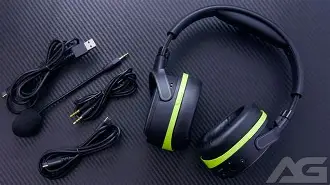
Active noise cancellation (ANC) and passive isolation
ANC performance is increasingly important for commuters and frequent travelers. The Penrose Wireless provides an ANC mode that reduces steady low-frequency noise (aircraft engines, bus and subway rumble) effectively. It is less aggressive on mid- and high-frequency sounds such as voices and sudden transients, which remain partially audible.
Passive isolation from the earcup seal complements ANC; when the fit is correct, a noticeable reduction in ambient noise occurs. Buyers should be aware that ANC effectiveness is highly dependent on fit and earcup seal, so personal comfort and ear shape will influence perceived noise reduction.
Discover deals on Audio & Headphones — updated daily.
Shop Amazon →Battery life and charging
Battery life is a critical practical metric. Penrose Wireless targets long playback endurance and supports fast charging. In everyday use with a mix of ANC on and moderate volume levels, the battery life falls into the range buyers expect for premium wireless headphones — long enough for multi-day commuting or cross-country flights when used conservatively.
Charging behavior supports convenience: top-up charging can quickly recover hours of playback from a short charge cycle. The inclusion of a wired audio passthrough or analog input is a welcome fallback for users who run out of battery mid-journey or prefer a wired connection for lower latency.
Microphone and call quality
With remote work and frequent calls, microphone performance matters. The Penrose Wireless places focus on delivering clear speech for calls in quiet and moderately noisy environments. It uses an array of microphones and digital signal processing to detect voice while suppressing background noise.
In particularly loud environments (busy streets, wind-exposed areas) the microphones can struggle to maintain consistent clarity; passersby may still pick up some environmental sound. For most teleconferencing and casual phone use, the microphone performance will satisfy expectations, but professional content creators may require dedicated headset microphones for studio-level capture.
Connectivity, codecs, and latency
Connectivity is a major choice factor. The Penrose Wireless supports modern Bluetooth versions and offers multipoint pairing, allowing simultaneous connections to a phone and a laptop — a useful feature for people switching between calls and media playback. Codec support includes common options that prioritize either quality (aptX/LDAC-like options) or universal compatibility (SBC/AAC). Buyers who prioritize highest-fidelity wireless streaming should confirm the exact codec availability in their purchase region, as support can vary by firmware and model batch.
Latency performance is reasonable for video streaming and casual mobile gaming, but competitive gamers or low-latency desktop users may encounter perceptible sync delays. When gaming or producing content, a wired connection or a headset with a low-latency mode is advisable.
Software, customization, and ecosystem
An accompanying mobile app provides firmware updates, ANC tuning, an EQ, and customizable touch/button controls. The app’s interface is functional, allowing users to tailor the sound profile and ANC strength. Regular firmware updates can improve connectivity and feature set, but buyers should be prepared for occasional update-driven changes to behavior.
Third-party integrations (voice assistants, multipoint switching gestures) add convenience for daily use. However, reliance on the app for certain features means users without a compatible smartphone will lose some functionality.
Real-world Use Cases: Who the Penrose Wireless Suits
Understanding practical use cases helps buyers match product strengths to personal needs:
- Frequent travelers: The ANC and battery life make the Penrose Wireless a good companion for flights and long train rides where low-frequency noise mitigation and hours of playback are valuable.
- Commuters and office workers: Multipoint pairing, comfortable fit for long sittings, and consistent call quality suit hybrid workers who move between phone calls and laptop meetings.
- Casual listeners and podcast fans: The punchy sound signature enhances modern pop, spoken-word clarity, and serialized podcasts.
- Mobile gamers and content creators: Not the best fit where ultra-low latency or studio-grade mic capture is required — wired or specialist headsets remain the better choice for those applications.
Pros & Cons
Pros
- Comfortable fit for extended listening sessions with well-padded earcups and a lightweight frame
- Strong, engaging sound signature that highlights bass and treble for modern music
- Effective ANC for low-frequency noise and good passive isolation when fitted correctly
- Long battery life with fast-charge capability for quick top-ups
- Multipoint pairing and a functional mobile app for personalization and firmware updates
Cons
- Mids can feel slightly recessed for vocal-heavy tracks and critical listening
- ANC is less effective on mid/high-frequency noise such as nearby conversations
- Microphone performance is serviceable but not studio-grade in very noisy environments
- Latency is acceptable for media but not ideal for competitive gaming
- Fit and ANC effectiveness vary by individual head/ear geometry — try before committing if possible
Comparison Table
| Feature | Penrose Wireless | Industry Reference (High-End) | Budget Alternative |
|---|---|---|---|
| Sound Profile | V-shaped, bass-forward, lively treble | Balanced to neutral, highly detailed | Warm, rolled-off treble |
| ANC | Good for low frequencies | Outstanding across all bands | Basic or none |
| Battery Life | Long (all-day use) | Very long with efficient power management | Moderate |
| Call Quality | Reliable in quiet/moderate noise | Excellent with advanced mic array | Variable |
| Latency | Good for video, not for competitive gaming | Low-latency modes available | High latency often |
| Comfort | Comfortable for long sessions for most users | Ergonomic, premium padding | Can be less comfortable over time |
| App & Features | Custom EQ, ANC tuning, updates | Advanced customization, multiple profiles | Limited or none |
| Value | Competitive for features offered | Premium price for premium performance | Best for tight budgets |
Buying Guide: How to Decide If the Penrose Wireless Is Right
Before purchasing, consider the following checklist that aligns with typical buyer priorities in the audio category.
Looking for the best Audio & Headphones deals on Amazon?
See Deals →Match the product to your primary use case
- Travel/commuting: Prioritize ANC effectiveness and battery life. The Penrose Wireless performs well for low-frequency cabin and vehicle noise.
- Work and calls: Look for consistent mic performance and multipoint support to handle phone and laptop pairing. Penrose is suitable for hybrid workers but not for broadcast-level voice capture.
- Critical listening or studio work: Choose neutral-sounding, wired-capable headphones. Penrose is tuned for a pleasing consumer sound rather than analytic monitoring.
- Gaming: If competitive gaming latency is a primary concern, seek headsets with proven low-latency modes or use a wired connection.
Evaluate fit and comfort
Comfort is subjective. Try to test the headphones for at least 20–30 minutes if possible, paying attention to clamping force, earpad material, and heat buildup. If a trial is not possible, check return policies and warranty terms to ensure there’s a path for exchange if the fit proves unsuitable.
Check codecs and device compatibility
Confirm codec support (SBC, AAC, aptX, LDAC, etc.) that aligns with the user’s primary devices. For example, iOS devices prioritize AAC compatibility; many Android devices benefit from aptX or LDAC for higher bandwidth audio.
Consider long-term support and firmware updates
An active update cadence can fix connectivity issues and improve features. Buyers should verify that the manufacturer has a record of providing timely firmware updates and a functional app before committing.
Assess value against alternatives
Compare the Penrose Wireless to similarly priced competitors on sound preference, ANC efficacy, and feature set. If the penultimate deciding factors are battery life and comfort, weigh those elements more heavily than brand hype.
Warranty and after-sales service
Check the length of warranty, what it covers (manufacturing defects vs. accidental damage), and the ease of contacting support. These pragmatic details matter for a product expected to see daily use and occasional travel-induced wear.
Conclusion
The Penrose Wireless occupies a compelling position for buyers who want engaging, modern-sounding wireless headphones with practical ANC, long battery life, and a comfortable design for everyday use. It is particularly well suited to commuters, travelers, and casual listeners who prefer an energetic sonic profile and value multipoint connectivity and app-driven customization.
However, it is not a perfect match for everyone. Those who prioritize utterly neutral sound for mixing and mastering, require studio-grade microphone capture, or demand the lowest possible latency for competitive gaming may find better fits elsewhere. ANC performance, while strong at low frequencies, is not class-leading across every band, and individual fit will influence isolation and comfort.
Ultimately, potential buyers should weigh the Penrose Wireless against their primary needs: if engaging sound, solid ANC for travel, and long battery life are top priorities, the Penrose Wireless deserves serious consideration. If precision monitoring, professional call capture, or ultra-low latency are critical, investigating specialized alternatives is advisable. The best outcome for a buyer is to test for fit and confirm device compatibility before making a final decision.